Monday, 4 November 2019
Flowers of Western Australia
This was my fourth visit to Australia and on all of my previous visits I've bemoaned the lack of flowers and the lack of colour in the country. Sure the tropical rain forests of the north and the temperate rain forests of the south are wonderful places but they are predominantly green or grey.
The endemic Callistemon sp. or bottlebrushes do add some colour in places and they are beautiful and fascinating shrubs, but where were the more delicate flowering plants? In my first three visits I was unable to find them, ranging from Queensland, to Victoria, to Southern Australia, to Perth, I just didn't see any, or at least not significant amounts. Finally on this fourth trip to Western Australia I did find some colour! Most of the flowers were south of Perth which is not surprising since further north the land turns into virtually desert. I can't put names to most of these flowers, but here they are anyway.
Friday, 1 November 2019
My full Australian list to date
![]() |
| Photo: Blue-faced honeyeater. |
Species
|
Location
with number of birds seen in brackets
|
Arctic Skua
|
Port Fairy, Pelagic VIC (2)
|
Australasian Figbird
|
Atherton Tablelands QLD (30),
Brisbane, Banks Street Reserve QLD (1), Brisbane, City QLD (1), Cairns,
Esplanade QLD (10), Noosa QLD (1), Port Douglas QLD (30)
|
Australasian Gannet
|
Sydney, at sea NSW (2), Fraser
Island QLD (2), Noosa, Noosa Headland QLD (10), Coffin Bay, Coffin Bay
National Park SA (10), Fisherman's Bluff SA (3), Fishery Bay SA (2), Lincoln
National Park, Jussieu Peninsula SA (10), Port Lincoln SA (2), Port Lincoln,
Axel Stenross maritime museum SA (2), Port Lincoln, Billy Lights Point SA
(11), Port Lincoln, Parnkalla trail SA (15), Port Lincoln, Rock Beach SA (1),
Sleaford Bay SA (50), Whalers Way SA
(1), Melbourne, Port Melbourne VIC (15), Melbourne, St Kilda VIC (1), Phillip
Island VIC (2), Port Fairy, Pelagic VIC (400), Busselton WA (1), Cape Leeuwin
WA (5), Cape Naturaliste, Lighthouse WA (30), Cape Naturaliste, Sugarloaf
Rock WA (2), Dunsborough, Whale Watching WA (5), Fremantle to Rottnest ferry
WA (2)
|
Australasian Grebe
|
Sydney, Centennial Park NSW (2),
Bauple QLD (2), Brisbane, Biami Yumba Park and Fig Tree Pocket QLD (2),
Brisbane, Dowse Lagoon QLD (20), Hervey Bay QLD (10), Hervey Bay, Arkarra
Wetlands QLD (2), Hervey Bay, Booral Road QLD (1), Kin Kin QLD (1), Noosa,
Botanic Gardens QLD (1), Noosa, Jabiru Park QLD (25), Port Douglas QLD (1),
Port Lincoln, Billy Lights Point SA (1), Bellarine Peninsula, Jerringot
Wetlands VIC (5), Lara, Serendip Reserve VIC (3), Melbourne, Royal Botanical
Gardens VIC (1), Melbourne, Westgate Park VIC (2), Werribee, Western
Treatment Plant VIC (4), Perth, Herdsman Lake WA (50), Perth, Lake Monger
Reserve WA (50)
|
Australasian Shoveler
|
Brisbane, Dowse Lagoon QLD (4),
Noosa, Jabiru Park QLD (5), Big Swamp SA (20), Port Lincoln, Billy Lights
Point SA (10), Bellarine Peninsula, Jerringot Wetlands VIC (1), Werribee,
Western Treatment Plant VIC (50), Perth, Herdsman Lake WA (30), Perth, Lake
Monger Reserve WA (5)
|
Australasian Swamphen
|
Sydney, Centennial Park NSW (50),
Atherton Tablelands QLD (2), Bauple QLD (1), Brisbane, Biami Yumba Park and
Fig Tree Pocket QLD (30), Brisbane, City QLD (1), Brisbane, Dowse Lagoon QLD
(10), Gympie, Lake Alford QLD (10), Hervey Bay QLD (100), Hervey Bay, Arkarra
Wetlands QLD (10), Hervey Bay, Booral Road QLD (4), Hervey Bay, Burrum Heads
QLD (2), Noosa, Botanic Gardens QLD (2), Noosa, Jabiru Park QLD (20), Noosa,
Water treatment works QLD (20), Port Douglas QLD (30), Bellarine Peninsula,
Jerringot Wetlands VIC (30), Bellarine Peninsula, Lake Lorne VIC (40),
Melbourne, Royal Botanical Gardens VIC (10), Phillip Island VIC (10),
Werribee, Western Treatment Plant VIC (200), Wilson's Promontory VIC (2),
Perth, Herdsman Lake WA (200), Perth, Lake Monger Reserve WA (50)
|
Australian Brush-turkey
|
Atherton Tablelands QLD (3),
Brisbane, Banks Street Reserve QLD (10), Brisbane, Biami Yumba Park and Fig
Tree Pocket QLD (1), Brisbane, Lone Pine Koala Sanctury QLD (10), Brisbane,
Plantation Redhill QLD (2), Daintree, Mossman Gorge QLD (1), Hervey Bay,
Burrum Heads QLD (1), Kuranda QLD (2), Noosa, Noosa Headland QLD (2),
Seventeen Seventy QLD (4), Seventeen Seventy, Campsite QLD (5)
|
Australian Bustard
|
Minolta - Exmouth Road WA (4) |
Observations of Australian birds and mammals by state and location
Here's a full list of the 353 bird species and 36 mammal species I've seen so far in Australia, grouped by state and location. The numbers in brackets are the maximum number of individuals I have seen at each location.
State
|
Location
|
Species seen with maximum numbers in brackets
|
NSW
|
Blue Mountains
|
Australian Magpie (10), Australian
Raven (1), Australian Wood Duck (2), Bell Miner (20), Black-faced
Cuckoo-shrike (1), Brown Thornbill (2), Common Myna (30), Crescent Honeyeater
(1), Crimson Rosella (20), Eastern Spinebill (1), Fan-tailed Cuckoo (1),
Galah (10), Golden Whistler (5), Grey Fantail (1), Lewin's Honeyeater (1),
Magpie-lark (1), Masked Lapwing (1), Pacific Black Duck (2), Peregrine (1),
Pied Currawong (10), Red Wattlebird (10), Red-whiskered Bulbul (10), Satin
Bowerbird (2), Sulphur-crested Cockatoo (50), Welcome Swallow (20),
White-browed Scrubwren (10), White-throated Treecreeper (2)
|
NSW
|
Sydney
|
Australasian Gannet (2),
Australasian Grebe (2), Australian Darter (2), Australian Magpie (6),
Australian Pelican (8), Australian Raven (5), Australian White Ibis (300),
Australian Wood Duck (30), Black Swan (20), Black-browed Albatross (1),
Caspian Tern (1), Channel-billed Cuckoo (1), Chestnut Teal (10), Common Myna
(50), Coot (200), Cormorant (2), Crested Pigeon (10), Crested Tern (2), Dusky
Moorhen (30), Fairy Martin (15), Fluttering Shearwater (500), Grey
Butcherbird (2), Hardhead (100), House Sparrow (1), Intermediate Egret (3),
Kelp Gull (2), Laughing Kookaburra (2), Little Black Cormorant (15), Little
Pied Cormorant (20), Little Raven (1), Magpie-lark (10), Masked Lapwing (20),
Nankeen Kestrel (1), New Holland Honeyeater (10), Noisy Miner (50), Pacific
Black Duck (4), Peregrine (1), Pied Cormorant (4), Pied Currawong (5), Purple
Gallinule (50), Rainbow Lorikeet (30), Red Wattlebird (3), Short-tailed Shearwater
(200), Silver Gull (1000), Spotted Dove (5), Starling (50), Sulphur-crested
Cockatoo (20), Superb Fairy-wren (10), Wedge-tailed Shearwater (500), Welcome
Swallow (50), White-browed Scrubwren (3), White-faced Heron (1), Willie
Wagtail (2), Yellow-tailed Black-Cockatoo (5)
Mammals: Humpback
whale, Indo-Pacific Bottlenose dolphin, New Zealand fur seal, grey-headed flying-fox
Key locations: Sydney botanic gardens, Centennial Park, Watson Bay, whale watching trip. |
QLD
|
Atherton Tablelands
|
Australasian Figbird (30),
Australian Brush-turkey (3), Australian Pelican (5), Black Kite (50),
Black-faced Monarch (2), Brown Treecreeper (1), Coot (20), Dusky Honeyeater
(2), Eastern Cattle Egret (50), Golden Whistler (5), Great Crested Grebe
(50), Large-billed Gerygone (10), Laughing Kookaburra (3), Little Eagle (1),
Magpie-lark (5), Mistletoebird (1), Olive-backed Sunbird (2), Pacific Black
Duck (6), Pied Currawong (2), Purple Gallinule (2), Rainbow Lorikeet (50),
Silvereye (1), Spangled Drongo (3), Spotted Harrier (1), Sulphur-crested
Cockatoo (10), Varied Triller (1), Whistling Kite (1)
Mammals: Duck-billed
platypus, Eastern grey kangaroo
Key locations: Yungaburra |
QLD
|
Avondale
|
Black Kite (20), Brown Honeyeater
(2), Double-barred Finch (3), Eastern Great Egret (1), Hardhead (1), Laughing
Kookaburra (15), Little Black Cormorant (30), Scarlet Honeyeater (2) |
Saturday, 26 October 2019
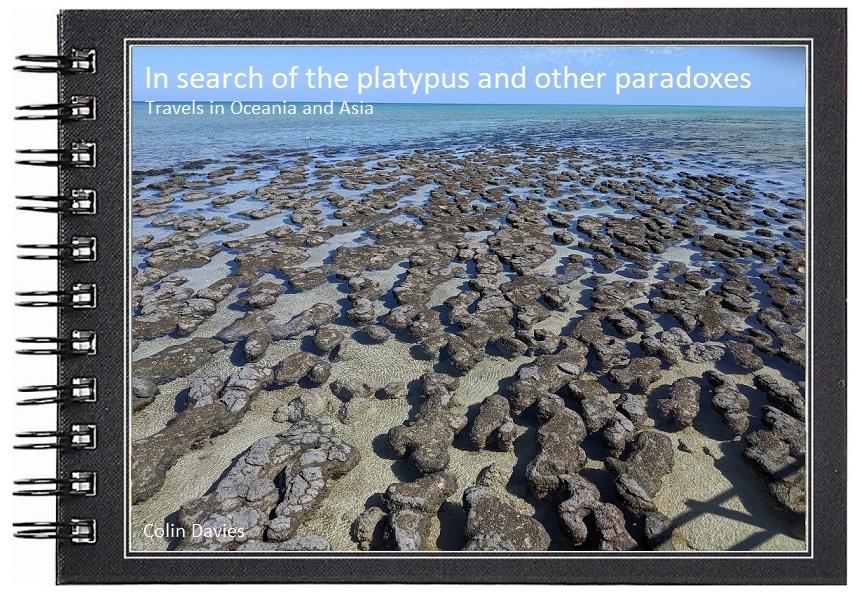
"It's life Jim, but not as we know it" - The Hamelin Pool Stromatolites
Evidence of some of the earliest life on earth is found in rocks which date back 3.7 billion years and contain the fossilised remains of structures known as stromatolites. Remarkably in a very few places in the world living stromatolites still exist and the largest and most diverse selection of all are in Western Australia at Hamelin Pool.
In reality a stromatolite is not a single organism, it is in fact a structure which is created by a multitude of living organisms, especially cyanobacteria. These microscopic organisms along with others, form biofilms (microbial mats) which trap, bind and cement sedimentary grains creating layers on which more biofilms can grow. These in turn trap more sedimentary grains, creating more layers, and so it goes on, layer upon layer, so that over time the stromatolite structures form. They are as close as it gets to living rocks.
Perhaps stromatolites greatest claim to fame is the part they played in putting oxygen into the earth's atmosphere 3.7 billion years ago. When they first appeared there was virtually no oxygen in the atmosphere, but because they are photosynthetic they take carbon dioxide and water to produce carbohydrates, and in doing this they liberate oxygen. Largely thanks to this, the levels of oxygen in the earth's atmosphere rose high enough to allow other life on earth to exist. The bad news for the stromatolites was that some of this new life then consumed the cyanobacteria, thus reducing the numbers of stromatolites.
They can exist in the modern world only in extreme conditions. High levels of salinity combined with the tidal nature of Hamelin Pool and extreme temperatures often exceeding 45 degrees celcius in summer creates an environment so harsh that virtually no other plants or animals can survive, thus allowing the stromatolites at Hamelin Pool to grow undisturbed.
Thursday, 24 October 2019
Ningaloo Reef, Western Australia
The opportunity to visit the Ningaloo Reef in Western Australia was one of the main attractions when planning this particular holiday. It's what is known as a fringing reef which means that it occurs close to shore and in fact the Ningaloo reef is considered to be one of the most accessible reefs in the World because in many places you can simply swim out to it from the shore.
Some would argue that it's more impressive even than the Great Barrier Reef, but though I've now been to both it's unfair of me to make a comparison. Not a great snorkeler, I'm also a poor swimmer and certainly I'm no diver, all of which makes it difficult for me to truly experience coral reefs and even more difficult therefore to make comparisons. However, armed with a brand new snorkel fitted with prescription lenses I gave it a go, and there was always the fall back of a glass bottom boat! Josh on the otherhand is a much better swimmer and snorkeler and even better he has an underwater camera with which he was able to take the first 10 or so of the photographs on this post.
Lake Monger, Perth
Lake Monger is next to Herdsman and though not as impressive it still has a decent array of species and is better for some species such as hoary-headed grebe and blue-billed duck. When I last visited the lake in July last year it was the middle of the Australian winter and I counted an impressive 300 blue-billed ducks, but today most of these birds had dispersed and I managed only about 20 birds of which all bar one were males. What I didn't realise until today was that the species breeds at Lake Monger and the highlight of the visit was finding this female with about six fluffy chicks. Really cute!
Wednesday, 23 October 2019
Once more to Herdsman in the rain
Herdsman is a fabulous place to visit if you have half a day to kill in Perth as I did today, and just like two weeks ago I finally managed to photograph a hard to get species. I was walking back to the car park and spotted a buff-banded rail walking amongst the long grass. At first I could only see its head and even that would disappear for periods, so I just stood still and waited. Eventually the bird emerged fully from the long stuff and started walking around on the shorter grass, and to my disbelief given how hard they can be to see at times, it seemed quite unconcerned by my presence and allowed me to take some reasonable photos. About 10 minutes later I then spotted a second bird, this one with a chick, and they were walking around the front garden of one of the nearby houses!
Tuesday, 22 October 2019
Lake Thetis and the Cervantes Stromatolites
Just outside Cervantes there is a small pool in which the conditions are so saline and so extreme that stromatolites can grow. This is nothing like the scale of those at Hamelin Pool, yet stromatolites none the less. See the post from Hamelin Pool for a fuller explanation of what stromatolites are
The Pinnacles Desert, WA
Emu crossing the Pinnacles Desert. I'm not sure how these birds manage to survive out here but they do and often in much harsher conditions than this. Emus are all across Australia, only really absent from heavily forested regions.
Monday, 21 October 2019
Hutt Lagoon and Kalbarri NP, WA
The algae in Hutt Lagoon turn the waters pink in certain lights and make it a popular tourist stop for anybody in the region of Kalbarri National Park. The lagoon also attracts quite large numbers of stilts, both banded and white-headed, which allow decent photo opportunities of mainly white birds in pink water!
Sunday, 20 October 2019
The Dugongs of Monkey Mia
![]() |
| Photo: Mother and calf dugong. |
Today we managed to see about 15 of these wonderful creatures, as well as about 10 Indo-Pacific bottlenose dolphins and a few awesome loggerhead turtles.
Western Grasswrens at Monkey Mia, WA
The enigmatic grasswrens are usually high up on any birders most wanted list when they visit Australia, but they are always difficult birds to connect with, mainly because they usually inhabit very remote and hard to get to places. You can't just fly to Sydney and see them during a walk around the botanic gardens!
Not surprising therefore that I was delighted to see several western grasswrens at Monkey Mia today. Also today lots of waders including Terek sandpiper, great knot, red-necked stint and red-capped plover, and terns were again well represented, with at least 40 Caspian as well as a few each of crested and lesser crested and fairy terns, the latter being a new tern for the holiday list.
Friday, 18 October 2019
A walk along the beach at Coral Bay, WA
The walk from Five Fingers Reef, through Coral Bay, to the headland north of Shark Lagoon is about 15km but well worth the effort, with turquoise seas and fine white sand beaches at the base of large sand dunes, the scenery is just stunning. Terns dominate here and during our stay I managed to see eight different species of tern of varying shapes and sizes as you can see from this photo!
Wednesday, 16 October 2019
A walk along the beach at night, Cape Range
Last night we had a walk on a remote beach at Cape Range in Western Australia, which is about 20km from Exmouth, the nearest town. It was a full moon and we came across a female green turtle egg laying on the beach. To give you an idea of the size of this magnificent animal, it's about 1.5m from nose to tail and weighs approximately 160kg (25 stone). The hole in the sand which it was digging is around 2m diameter. Yet another amazing experience on this holiday. We didn't stay with it too long not wanting to disturb it, and fortunately we had red light on our head torches which causes minimum disturbance to nocturnal animals. All of these photos were taken on my phone which is a Google Pixel 4a, on the night setting.
Tuesday, 15 October 2019
Budgies!
When I was a kid we had a pet budgie, shamefully held captive is a small cage. Today in my fourth visit to Australia I finally caught up with a wild budgerigar at Exmouth sewage works. Truth to tell I've been seeing flocks of up to 30 birds flying over for a day or two now, but they never seem to land until today, when I spotted this cracking female sitting on the perimeter fence.
However, just because we remember budgies with affection from our childhood doesn't mean that we should under estimate them or regard them as "plastic" or feral in anyway. I've heard budgerigars described as the hardiest of all Australian birds, they live in extreme environments in the baking heat of the arid heart of Australia and are nomadic, flocking together in huge numbers in their search for water and food. How awful to keep a bird with such a lifestyle in a tiny cage, yet pet shops still sell them and people still keep them.
Monday, 14 October 2019
Perentie Lizard and Long-nosed Dragon, Exmouth, WA
Perentie lizards are the largest and most impressive of all Australian lizards, often growing up to 2.5m long. This particular individual at Exmouth sewage works was probably about 1.5m, but still an impressive animal.
Little Curlew, Exmouth, WA
![]() |
| Photo: adult little curlew. |
In 1985 I was on a long weekend birding in Norfolk with my dad when a little whimbrel was found at Blakeney. It was the second for Britain or possibly the first if it was a returning bird, and I don't think that there have been any since. Now approaching 35 years since the last UK record, it's about as close as it gets to a blocker on my UK list following the fall of Hudsonian Godwit a year or two ago. I'm pretty sure at the time that it was considered an endangered species like so many of it's curlew / whimbrel cousins. These days the name has changed to little curlew and I don't think it is quite as endangered as we thought back then but still a very difficult bird to connect with anywhere.
I never thought that I would ever see another little whimbrel, yet on the same day that I encountered my first flock of budgies flying over Exmouth sewage works I also came across eight little curlews with banded lapwings on a nearby playing field.
Sunday, 13 October 2019
Around Exmouth
Exmouth is an amazing place, not a particularly beautiful town, but it really feels like you are in the outback or in a frontier town. Emus walking around the streets, warning signs about dingos and some familiar species not looking quite so familiar as I expected.
Take the bird above for example. It's a crested pigeon, quite common across all of Australia including in the major cities of the south and east.This however is of the western race whitlocki which seems to me to be much brighter than others I have seen.
Cape Range on the North West Cape
![]() |
| Photo: Euro. |
This is where the desert meets the sea, the vegetation on land is very scrubby, there are no trees, warnings of dingos, very little freshwater and daytime temperatures can easily reach 50'C in summer. Not that you would want to be here in summer because not only is it unbearably hot, it's also cyclone season.
Red Kangaroo
Red kangaroos are the largest living marsupial, with adult males often attaining a height of 1.4m and weighing up to 85kg. They are quite a common and widespread species but mainly across the interior and so are difficult to see if you just stick to the coastal cities and resorts. The only places where their range extends down to the coast are in the Nullarbor region and the north west coast between Exmouth and Broome. This animal, photographed on the golf course at Exmouth, was my first red kangaroo on my 4th visit to Australia.
Subscribe to:
Posts (Atom)
-
Photo: New Holland Honeyeater. There are 76 species of honeyeater in Australia forming the largest family of Australian passerines. They...
-
Photo: Snowy albatross. "Wanderer at 6 o'clock!", the cry went up and sent shivers down my spine. This was the moment I ha...
-
Photo: Rainbow lorikeets. Parrots, lorikeets, corellas, rosellas and cockatoos include some of the most showy, noisy and colourful of al...


