 |
| Photo: Rainbow lorikeets. |
Tuesday, 11 June 2019
Parrots, Lorikeets, Corellas, Rosellas and Cockatoos


Sunday, 17 March 2019
Honeyeaters and bottlebrushes
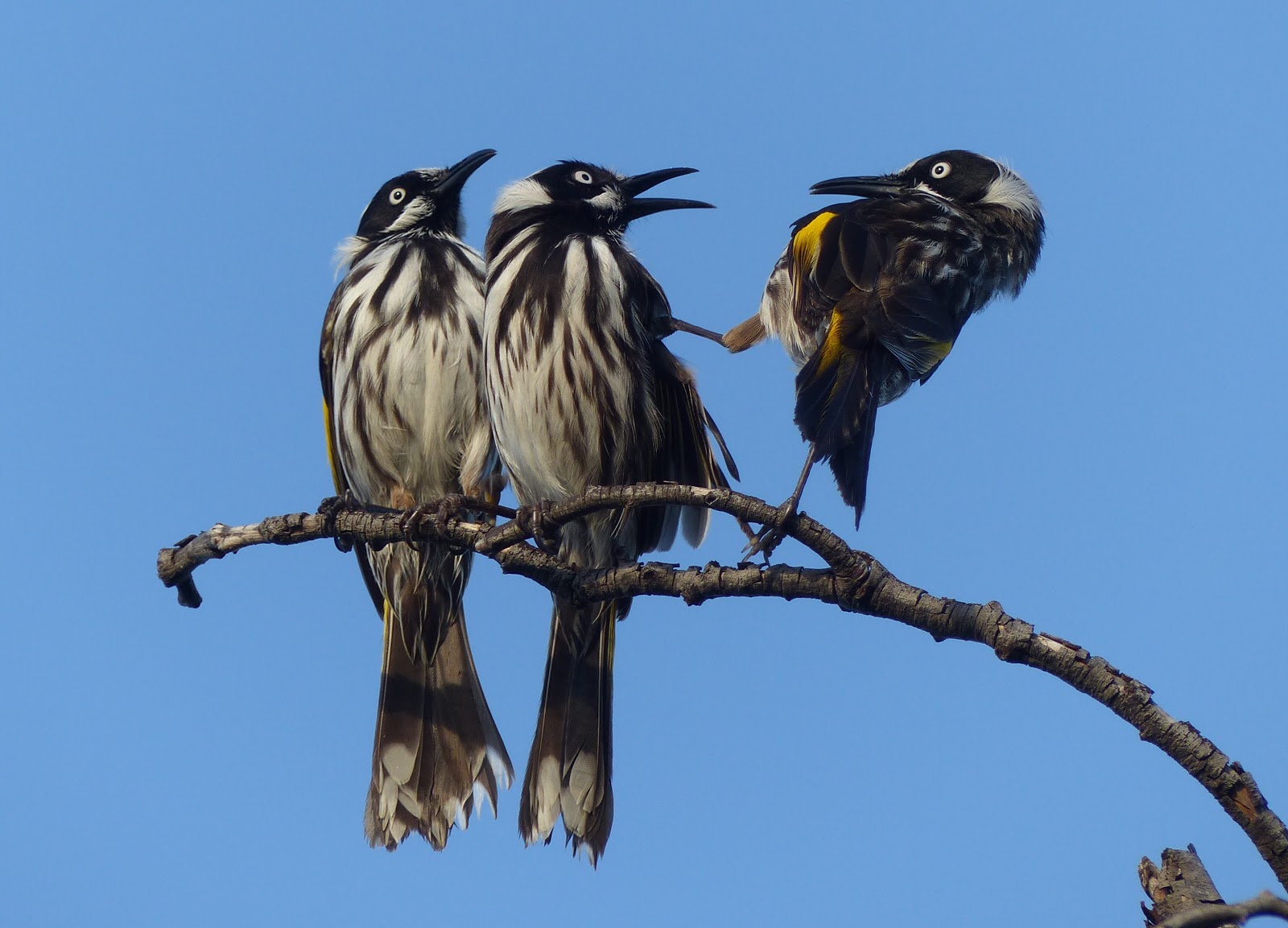 |
| Photo: New Holland Honeyeater. |

Monday, 17 December 2018
Observations of Australian birds and mammals by state and location

Here's a full list of the 320 bird species and 30 mammal species I've seen so far in Australia, grouped by state and location. The numbers in brackets are the maximum number of individuals I have seen at each location.
State
|
Location
|
Species seen with maximum numbers in brackets
|
NSW
|
Blue Mountains
|
Australian Magpie (10), Australian Raven (1), Australian Wood
Duck (2), Bell Miner (20), Black-faced Cuckoo-shrike (1), Brown Thornbill
(2), Common Myna (30), Crescent Honeyeater (1), Crimson Rosella (20), Eastern
Spinebill (1), Fan-tailed Cuckoo (1), Galah (10), Golden Whistler (5), Grey
Fantail (1), Lewin's Honeyeater (1), Magpie-lark (1), Masked Lapwing (1),
Pacific Black Duck (2), Peregrine (1), Pied Currawong (10), Red Wattlebird
(2), Red-whiskered Bulbul (10), Satin Bowerbird (2), Sulphur-crested Cockatoo
(50), Welcome Swallow (20), White-browed Scrubwren (5), White-throated
Treecreeper (2)
|
NSW
|
Sydney
|
Australasian Gannet (2), Australasian Grebe (2), Australian
Darter (2), Australian Magpie (6), Australian Pelican (8), Australian Raven
(5), Australian White Ibis (50), Australian Wood Duck (30), Black Swan (6),
Black-browed Albatross (1), Caspian Tern (1), Channel-billed Cuckoo (1),
Chestnut Teal (2), Common Myna (50), Coot (50), Cormorant (2), Crested Pigeon
(5), Crested Tern (2), Dusky Moorhen (5), Fairy Martin (5), Fluttering
Shearwater (500), Grey Butcherbird (2), Hardhead (50), House Sparrow (1),
Intermediate Egret (3), Kelp Gull (2), Laughing Kookaburra (2), Little Black
Cormorant (2), Little Pied Cormorant (20), Little Raven (1), Magpie-lark (4),
Masked Lapwing (3), Nankeen Kestrel (1), New Holland Honeyeater (5), Noisy
Miner (50), Pacific Black Duck (4), Peregrine (1), Pied Cormorant (4), Pied
Currawong (5), Purple Gallinule (50), Rainbow Lorikeet (30), Red Wattlebird
(3), Short-tailed Shearwater (200), Silver Gull (50), Spotted Dove (5),
Starling (50), Sulphur-crested Cockatoo (8), Superb Fairy-wren (5),
Wedge-tailed Shearwater (500), Welcome Swallow (50), White-browed Scrubwren
(3), White-faced Heron (1), Willie Wagtail (2), Yellow-tailed Black-Cockatoo
(5)
Mammals: Humpback whale, Indo-Pacific Bottlenose dolphin, New Zealand fur seal, grey-headed flying-fox Key locations: Sydney botanic gardens, Centennial Park, Watson Bay, whale watching trip. |
QLD
|
Atherton Tablelands
|
Australasian Figbird (30), Australian Brush-turkey (3),
Australian Pelican (5), Black Kite (50), Black-faced Monarch (2), Brown
Treecreeper (1), Coot (20), Dusky Honeyeater (2), Eastern Cattle Egret (50),
Golden Whistler (5), Great Crested Grebe (50), Large-billed Gerygone (10),
Laughing Kookaburra (3), Little Eagle (1), Magpie-lark (5), Mistletoebird
(1), Olive-backed Sunbird (2), Pacific Black Duck (6), Pied Currawong (2), Purple
Gallinule (2), Rainbow Lorikeet (50), Silvereye (1), Spangled Drongo (3),
Spotted Harrier (1), Sulphur-crested Cockatoo (10), Varied Triller (1),
Whistling Kite (1) Mammals: Duck-billed platypus, Eastern grey kangaroo Key locations: Yungaburra |
Wednesday, 12 December 2018
My full Australian list to date
 |
| Photo: Brown falcon. |
Species
|
Location
with number of birds seen in brackets
|
Arctic Skua
|
Port Fairy, Pelagic VIC (2)
|
Australasian Figbird
|
Atherton Tablelands QLD (30),
Brisbane, Banks Street Reserve QLD (1), Brisbane, City QLD (1), Cairns,
Esplanade QLD (10), Noosa QLD (1), Port Douglas QLD (30)
|
Australasian Gannet
|
Sydney, at sea NSW (2), Fraser
Island QLD (2), Noosa, Noosa Headland QLD (10), Coffin Bay, Coffin Bay
National Park SA (10), Fisherman's Bluff SA (3), Fishery Bay SA (2), Lincoln
National Park, Jussieu Peninsula SA (10), Port Lincoln SA (2), Port Lincoln,
Axel Stenross maritime museum SA (2), Port Lincoln, Billy Lights Point SA
(11), Port Lincoln, Parnkalla trail SA (15), Port Lincoln, Rock Beach SA (1),
Sleaford Bay SA (50), Whalers Way SA
(1), Melbourne, Port Melbourne VIC (15), Melbourne, St Kilda VIC (1), Phillip
Island VIC (2), Port Fairy, Pelagic VIC (400), Fremantle to Rottnest ferry WA
(2)
|
Australasian Grebe
|
Sydney, Centennial Park NSW (2),
Bauple QLD (2), Brisbane, Biami Yumba Park and Fig Tree Pocket QLD (2),
Brisbane, Dowse Lagoon QLD (20), Hervey Bay QLD (10), Hervey Bay, Arkarra
Wetlands QLD (2), Hervey Bay, Booral Road QLD (1), Kin Kin QLD (1), Noosa,
Botanic Gardens QLD (1), Noosa, Jabiru Park QLD (25), Port Douglas QLD (1),
Port Lincoln, Billy Lights Point SA (1), Bellarine Peninsula, Jerringot
Wetlands VIC (5), Lara, Serendip Reserve VIC (3), Melbourne, Royal Botanical
Gardens VIC (1), Melbourne, Westgate Park VIC (2), Werribee, Western
Treatment Plant VIC (4), Perth, Herdsman Lake WA (50), Perth, Lake Monger
Reserve WA (50)
|
Australasian Shoveler
|
Brisbane, Dowse Lagoon QLD (4),
Noosa, Jabiru Park QLD (5), Big Swamp SA (20), Port Lincoln, Billy Lights
Point SA (10), Bellarine Peninsula, Jerringot Wetlands VIC (1), Werribee,
Western Treatment Plant VIC (50), Perth, Herdsman Lake WA (30), Perth, Lake
Monger Reserve WA (5)
|
Australian Brush-turkey
|
Atherton Tablelands QLD (3),
Brisbane, Banks Street Reserve QLD (10), Brisbane, Biami Yumba Park and Fig
Tree Pocket QLD (1), Brisbane, Lone Pine Koala Sanctury QLD (10), Brisbane,
Plantation Redhill QLD (2), Daintree, Mossman Gorge QLD (1), Hervey Bay,
Burrum Heads QLD (1), Kuranda QLD (2), Noosa, Noosa Headland QLD (2),
Seventeen Seventy QLD (4), Seventeen Seventy, Campsite QLD (5) |
Saturday, 1 December 2018
In the company of giants and lyrebirds

The temperate rainforest to the north and east of Melbourne is dominated by mountain ash Eucalyptus regnans which is the tallest flowering plant and 2nd tallest tree in the world and occurs naturally only in Victoria and Tasmania. The forest also has an interesting understory which includes some very prehistoric looking tree ferns. It really would be easy to imagine dinosaurs living in a place like this and in fact they still do because there are many interesting birds about even if they are often frustratingly difficult to see.
Take the superb lyrebird for example. This is a noisy species which looks a bit like a small pheasant and has a spectacular display. Should be easy enough to see you might think. Well no, at least not for me. I've looked (and listened) for them on several occasions in the past without success. Until today. Josh and I were walking through Sherbrooke Forest in the Dandenong Range, accessed from Grants picnic site when we heard the song of a whipbird. There was a guy without binoculars about 50m ahead of us standing and listening too. When we got up to him he casually announced "the lyrebird is just through that gap singing"...... and sure enough, there it was, a male lyrebird in full view singing away mimicking a whipbird! Perhaps that's why I haven't heard any in the past, because I thought they were something else. We watched and listened for five minutes before it wandered off and out of view. Fortunately though this wasn't the end of our lyrebird experience for the day, it proved to be just a foretaste of what was to come.
Friday, 30 November 2018
Werribee Water Treatment Plant, back for seconds (and thirds!)
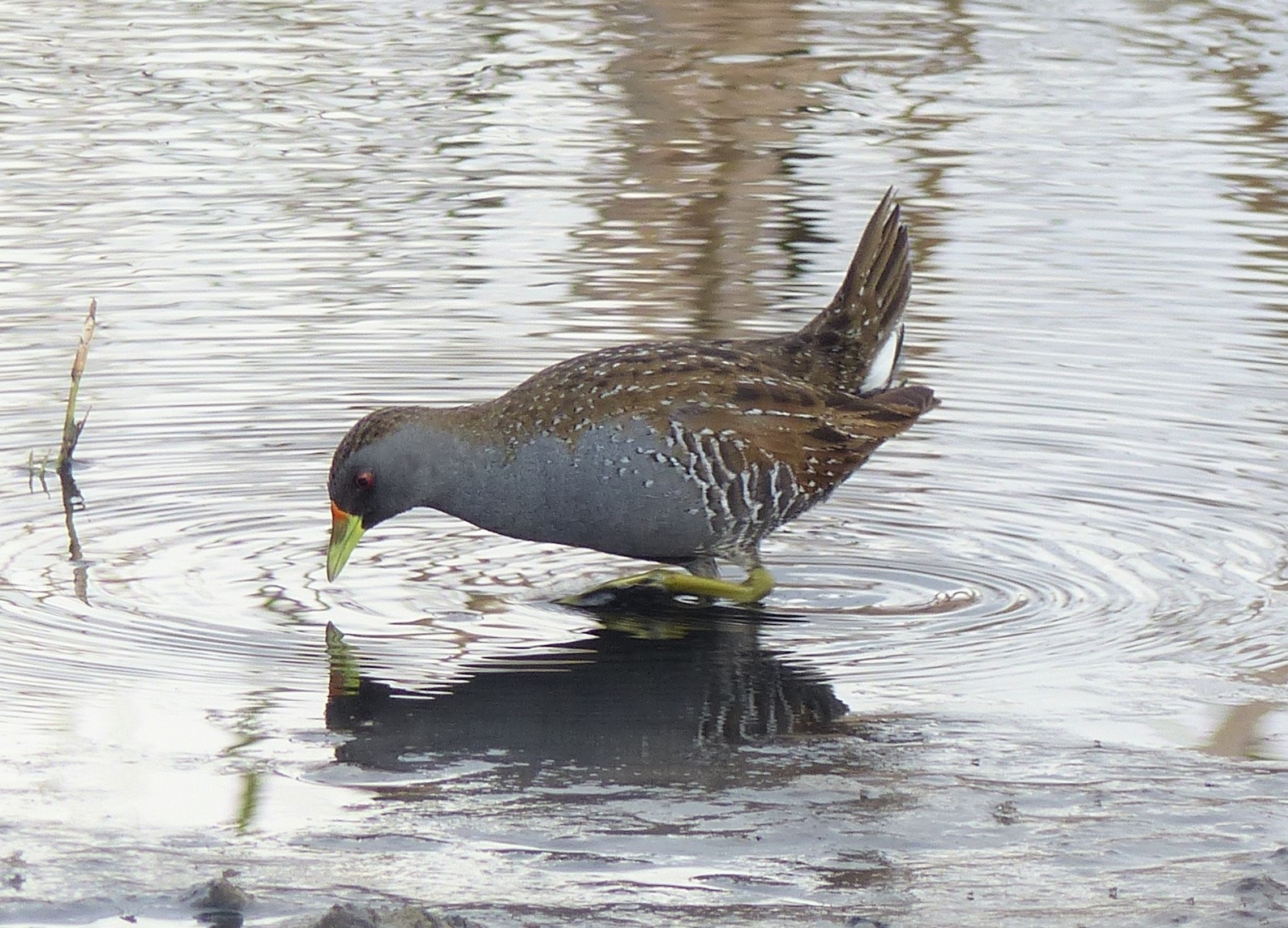
Back in Melbourne for a week and the obvious thing to do was to get the key to allow me access to Werribee Western Treatment Plant again. I mean it is rated one of the best wetland sites in Australia so crazy not to go again, and it worked out pretty well actually, the first two weeks I was there I only saw one new species for my Aussie list, yet this week I managed to add several. Key to this success was finally working out where Crake Pond was, and this provided me with not only about four Australian spotted crakes and three Baillon's crakes, but also a pectoral sandpiper and nearby an Australian hobby. In the final analysis, Werribee WTP provided me with 103 species during my stay in Melbourne.
Seeing southern emu-wrens

One of the highlights of my holiday from a birding point of view was finally seeing southern emu-wrens. I didn't get any photos of the birds for reasons I will explain, but it was such a great experience that it's worth recounting.
I'd heard that there were southern emu-wrens on Anglesea Heath at the start of the Great Ocean Road and decided it was worth a look, if for no other reason than it was somewhere new to visit. I headed for a small and little known botanical reserve called the Mary D White reserve which lies about 1km west of Anglesea and is accessed from the Guvvos beach car park. I had spent about an hour in the area and seen a few superb fairy-wrens and best of all a new species of honeyeater for me, white-eared, but was starting to lose hope with the emu-wrens. I'd looked for them before around Port Lincoln without a sniff of the birds and this looked like it would be a repeat no-show.
Then suddenly I heard the faintest of calls, a high pitched steet. Was it and insect, was it a bird? Surely an insect, it appeared to be in the vegetation almost under my feet! I waited patiently for several minutes, hearing the call again occasionally and eventually started catching glimpses of a very small bird moving through the undergrowth right alongside me. Eventually I realised that there were about five birds close by, and finally I got an excellent view of a stunning male with sandy brown plumage and bright pale blue throat and long tail. A stunning little bird. Not surprising that I'd found them so difficult in the past if I could initially not see them in vegetation that barely covered my shoes! And then they were gone, not to be seen or heard again.
Sunday, 25 November 2018
Bellarine Peninsula

So back in Australia and I found myself some decent self catering accommodation in Werribee and then contacted Melbourne Water and managed to get hold of the required key for the rest of the week. However, not wanting to spend all of my remaining time at the water treatment plant, today I decided to visit the Bellarine Peninsula near Geelong and about 110km south west of Melbourne CBD. It's a really impressive place full of great birds, impressive wetlands and glorious beaches.
However the first place I visited on the way to Ballarine was Jerringot Wetlands in the city of Geelong where I managed to see a few Latham's snipes which were new for me. This is a species which breeds in Japan and spends the northern hemisphere winter in Australia.
Saturday, 24 November 2018
Return to Aus!

Great to be back in Aus after a brief visit to North Island, New Zealand, and one of the most obvious differences are the very visible Australian mammals which help make the country so special to me.
Friday, 23 November 2018
The Muriwai Australasian Gannet Colony

I cut short my visit to Tiritiri by a day in order to make sure that I got to Muriwai before I left New Zealand. I've been to gannet colonies before at places like Bass Rock, St Kilda, Noss, Fair Isle, Herma Ness and Bempton Cliffs and I wanted to see how this compared. I was not disappointed.
It might not have the numbers of birds, just a couple of thousand pairs I believe, but still really impressive.
Thursday, 22 November 2018
The Sadness of Tiritiri Matangi
 |
| Takahe |
Tuesday, 20 November 2018
Hauraki Gulf Pelagic
 |
| New Zealand storm petrel |
Monday, 19 November 2018
Wrybill at Miranda

I had an enjoyable visit to Miranda today, if a little frustrating because I got my timings all wrong and arrived at low tide rather than high tide and then had a six hour wait for the action to begin. Eventually though it did begin and in amongst the thousands of bar-tailed godwits, knot and other waders, at least 47 wrybill. This is an iconic New Zealand endemic, with a bizzare bill which bends to the right of the bird. Also today, white-fronted terns, New Zealand Dotterel and pied stilts, which included at least one pied x black stilt hybrid.
Sunday, 18 November 2018
Wanderer at 6 o'clock!
 |
| Photo: Snowy albatross. |
The new arrival was considerably bigger, a wandering albatross with a wingspan of up to 3.5m, the longest of any living bird. This awesome and majestic bird glided past the boat without a single flap of the wings, dwarfing the nearby molyhawks and taking my breath away. Over the next hour or so the bird stayed with us and was joined by an immature bird, as well as two other species of great albatross.
Saturday, 17 November 2018
Koalas on the Great Ocean Road

On our way to Port Fairy from Melbourne for a pelagic, we decided that it was too good an opportunity to pass up on the Great Ocean Road. Really beautiful scenary, if a little busy at the Twelve Apostles. My favourite stop was at Kennett River where we saw about 20 koalas, some with babies, a tawny frogmouth with a baby and several Australian king parrots.
Friday, 16 November 2018
Long Forest
 |
| White-plumed honeyeater |
Long Forest is about 30 miles north west of Melbourne and is an area of gum tree and eucalyptus scrub known as mallee. I visited it today just to try to get a few new species on the list and to check out a new area. In the end I added three new species, white-plumed honeyeater, buff-rumped thornbill and best of all speckled warbler. It's an interesting area with lots of potential and well worth a look for any birder in the Melbourne area.
Westgate Park, Melbourne
 |
| Hoary-headed grebe |
I "discovered" Westgate Park today. Its a couple of pools and some scrub below the Westgate bridge in Port Melbourne. I was surprised at how good it was for birds, I recorded 37 species in a couple of hours. I was particularly pleased to be able to get some half decent photos of hoary-headed grebe, a species I have struggled with in the past. Westgate park is obviously not in the same league as the Western Treatment Plant, but if you're in Melbourne for a day or two with limited birding time available, it's a decent place to visit.
Thursday, 15 November 2018
Dandenong Range

The Dandenong Range lies just to the east of Melbourne and offers an opportunity to visit temperate rain forest within easy reach of the city. Huge Australian mountain ash trees, which are actually a type of eucalyptus, are the largest flowering plant in the world and there are prehistoric tree ferns which grow up to 12m. Birding is always difficult in this type of habitat and today was no exception, but there are a few decent birds here.
Wednesday, 14 November 2018
Common Ringtail Possum at Finns Reserve

I was walking along the River Yarra at Finns Reserve today when I came across this common ringtail possum watching me from its drey. It was only at head height in a loosely constructed drey in a small spindly bush. This is a common species in Australia, but a first for me. I also have a resident brushtail possum in the garden of my apartment and a grey-headed flying-fox flew over tonight. I counted three platypus on the river this evening and the wombat was back after an absence of several days.
It may seem like I'm overdosing on platypus at the moment, but the reason is simple, I'm not here just to tick platypus I'm here to observe them and study them as much as I can in the limited time that I have available. I want to see how they swim, how they dive and what their movements are around the river as the late afternoon and evening progresses. I can already see a pattern in their movements and I've found the location of at least one burrow. In certain parts of the river I can see them feeding underwater. It's really interesting and fascinating stuff to watch, and very soon I won't be able to do this anymore because I'll be back in the UK, so why not overdose while I can? Platypus are generally difficult animals to see, so the opportunity to get to know them well is one which shouldn't be turned down. In anycase, every time I go I see something else good, for example echidna, wombat, possum and a host of decent birds.
Tuesday, 13 November 2018
Black-tailed native-hen

No doubting the bird of the day today. Any bird with the name black-tailed native-hen is going to get my vote! It's taken me three visits to Australia and three visits in the past seven days to the Western Treatment Plant to see one but eventually I managed it today, with not one, but four birds together, almost in a mini-leck. Black-tailed native-hens are obviously related to moorhens with a different bill colour, an erect tail and a crazy look in their eyes. Fabulous birds. Other highlights today, an immature white-bellied eagle and spotted and swamp harriers. To be honest though, it's not about any one species, it's about the spectacle.
The Western Treatment Plant is a huge site, around 12 miles (20km) from one end to the other and it's full of lakes of varying sizes and every lake is packed with birds. Goodness knows how many Australian shelducks or pink-eared ducks or hardheads or hoary-headed grebes or black swans or stilts or avocets or sharp-tailed sandpipers or whiskered terns there are, certainly hundreds and probably thousands of each. It really is reminiscent of Donana in Spain during the the rice harvest. And though it's smaller than Donana, it's just as remote, today I didn't meet a single other person all day. Not one person. It's just a staggering place.
Subscribe to:
Posts (Atom)
-
 Photo: Snowy albatross. "Wanderer at 6 o'clock!", the cry went up and sent shivers down my spine. This was the moment I ha...
 -
 Photo: New Holland Honeyeater. There are 76 species of honeyeater in Australia forming the largest family of Australian passerines. They...
 -
 I spent the low tide this afternoon on the southern end of Four Mile Beach, just at the point where the mangroves begin. It's a great sp...