Sunday, 25 October 2015
Mateeba Wetlands
My first blue-winged kookaburra. All of the others have been laughing kookaburra.
White-bellied sea eagle.
Mobbed by a whistling kite.
Australian darter
Green pygmy-Goose.
Double-barred or owl finch.
Red-backed fairy-wren.
At least 3000 magpie geese.
Amazingly, two weeks into our holiday and these were our first kangaroos.
Intermediate egret.
Emu with chicks. I still don't know whether or not to quite believe this. I thought emu's were virtually unknown in this part of Australia.
There are a lot of impressive termite mounds in this area.
Finding Duck-billed Platypus in the Atherton Tablelands.
To see duck-billed platypus was the fulfilment of a lifetimes ambition. When I was a young child I read about and saw t.v. programmes about this mysterious, venemous mammal with a ducks bill, which lays eggs and lives on the other side of the world, way beyond the reach of my travel ambitions. Today I finally managed to see one.
We arrived at Peterson creek near Yungaburra in the Atherton Tablelands at about lunch time. We knew platypus were often seen here because there is a viewpoint, but invariably all of the sightings are at dawn or dusk. Still, we had to give it a try.
Having no success from the viewpoint we walked along the footpath which follows the creek and saw a decent variety of birds and some water lizards. Suddenly I couldn't believe my eyes, right in front of me the unmistakable shape of a platypus appeared in the water. I beckoned Elaine over and we watched it at close range for a couple of minutes before it disappeared into the vegetation. For a while we could see the vegetaion moving, and even caught a glimpse of parts of the animal, but it never showed itself as well again. What an awesome experience though, highlight of the holiday by far for me.
My first sighting of this fantastic animal. I don't know how I supressed a yell of delight when I saw this distinctive shape in the water!
And this is where it lives, Peterson creek.
On the way to Yungaburra we came across this superb spotted harrier.
Mistletoe bird.
Black-faced monarch.
We arrived at Peterson creek near Yungaburra in the Atherton Tablelands at about lunch time. We knew platypus were often seen here because there is a viewpoint, but invariably all of the sightings are at dawn or dusk. Still, we had to give it a try.
Having no success from the viewpoint we walked along the footpath which follows the creek and saw a decent variety of birds and some water lizards. Suddenly I couldn't believe my eyes, right in front of me the unmistakable shape of a platypus appeared in the water. I beckoned Elaine over and we watched it at close range for a couple of minutes before it disappeared into the vegetation. For a while we could see the vegetaion moving, and even caught a glimpse of parts of the animal, but it never showed itself as well again. What an awesome experience though, highlight of the holiday by far for me.
My first sighting of this fantastic animal. I don't know how I supressed a yell of delight when I saw this distinctive shape in the water!
And this is where it lives, Peterson creek.
On the way to Yungaburra we came across this superb spotted harrier.
Mistletoe bird.
Black-faced monarch.
Saturday, 24 October 2015
Michaelmas Cay and the Great Barrier Reef
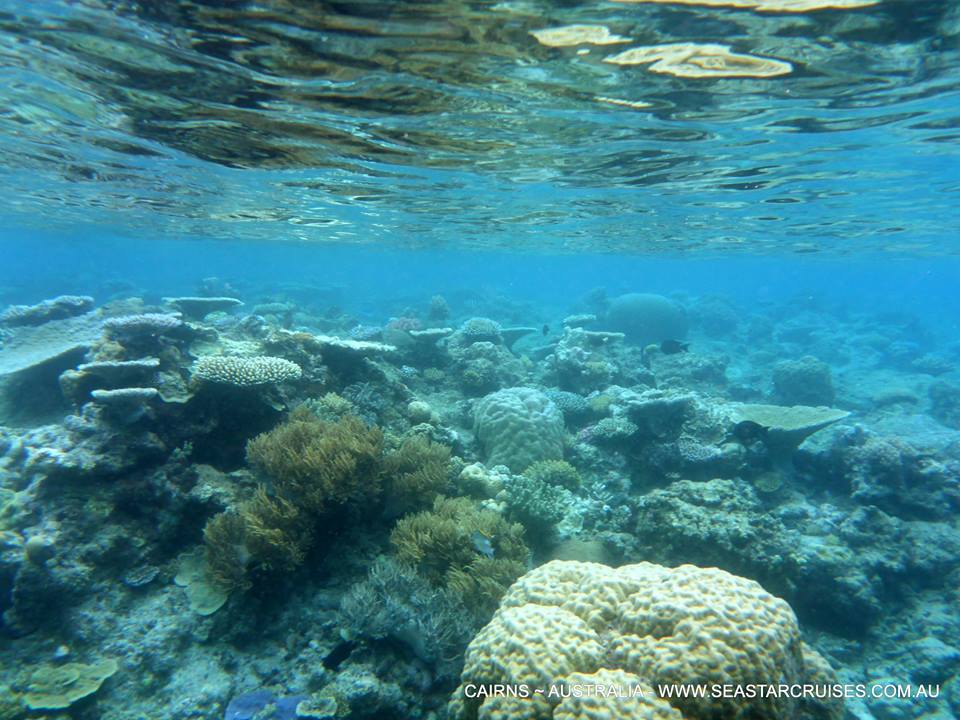
We had an awesome visit to the Great Barrier Reef today. We started at Michaelmas Cay this morning with the large seabird colony, and spent the afternoon snorkeling at Hastings Reef.
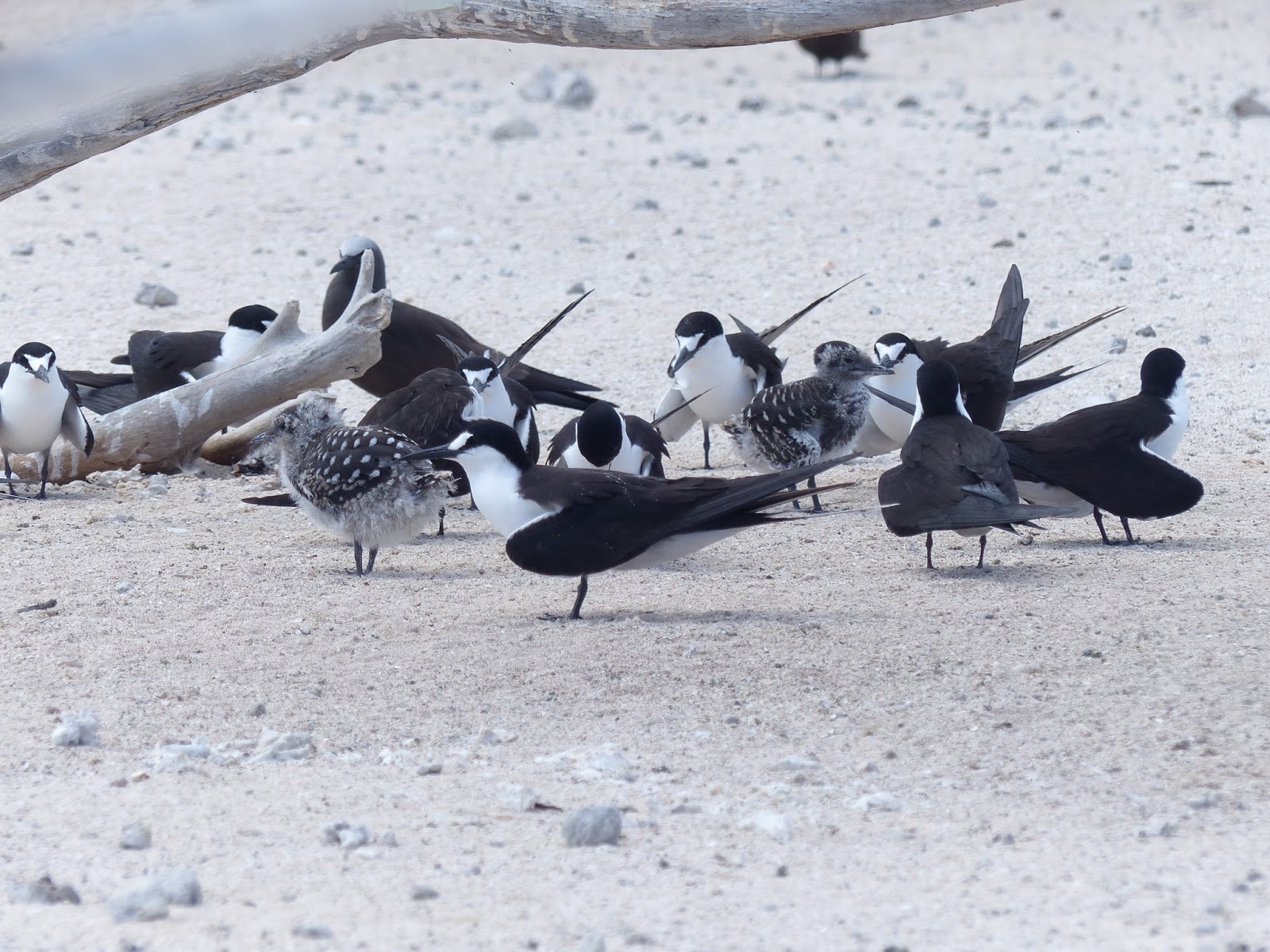
Common noddies breed on the Cay in their thousands, along with sooty terns and brown boobies. There are also black noddies, Greater and lesser frigatebirds, black-naped terns and crested terns.
We went on this trip with Seastar cruises from Cairns and we chose them specifically because they are one of the very few boats which is allowed to land on Michaelmas Cay. I'm not trying to promote Seastar, except to say that they were very good, and in the end they were the only operator I considered because landing on Michaelmas Cay was the most important part of the day for me. The photos at the bottom of this post of the coral reef and fish were taken by the crew of the boat during our visit.
Common noddy.
Bridled terns.
Brown booby, common noddies and sooty terns.
Crested tern.
Brown booby
Great frigatebird, female or juvenile.
Male lesser frigatebird. Notice the white armpits.
Crested terns.
Brown boobies and bridled terns.
Common noddy. Notice the grey rather than white cap and brown plumage.
Black noddy (left) and common noddies.
Great frigatebird. The angel of death!
Sooty tern.
Michaelmas Cay! There's not much to these cays, makes me wonder how they can survive the annual cyclones which pass their way! Hard to believe, but these cays are made by and exist purely because of parrotfish. The corals are ground down by the fish and their poo makes these cays!
The following photos were taken by the crew of the boat during our visit.
Common noddies breed on the Cay in their thousands, along with sooty terns and brown boobies. There are also black noddies, Greater and lesser frigatebirds, black-naped terns and crested terns.
We went on this trip with Seastar cruises from Cairns and we chose them specifically because they are one of the very few boats which is allowed to land on Michaelmas Cay. I'm not trying to promote Seastar, except to say that they were very good, and in the end they were the only operator I considered because landing on Michaelmas Cay was the most important part of the day for me. The photos at the bottom of this post of the coral reef and fish were taken by the crew of the boat during our visit.
Common noddy.
Bridled terns.
Brown booby, common noddies and sooty terns.
Crested tern.
Brown booby
Great frigatebird, female or juvenile.
Male lesser frigatebird. Notice the white armpits.
Crested terns.
Brown boobies and bridled terns.
Common noddy. Notice the grey rather than white cap and brown plumage.
Black noddy (left) and common noddies.
Great frigatebird. The angel of death!
Sooty tern.
Michaelmas Cay! There's not much to these cays, makes me wonder how they can survive the annual cyclones which pass their way! Hard to believe, but these cays are made by and exist purely because of parrotfish. The corals are ground down by the fish and their poo makes these cays!
The following photos were taken by the crew of the boat during our visit.
Subscribe to:
Posts (Atom)
-
Photo: Snowy albatross. "Wanderer at 6 o'clock!", the cry went up and sent shivers down my spine. This was the moment I ha...
-
Photo: New Holland Honeyeater. There are 76 species of honeyeater in Australia forming the largest family of Australian passerines. They...
-
I spent the low tide this afternoon on the southern end of Four Mile Beach, just at the point where the mangroves begin. It's a great sp...