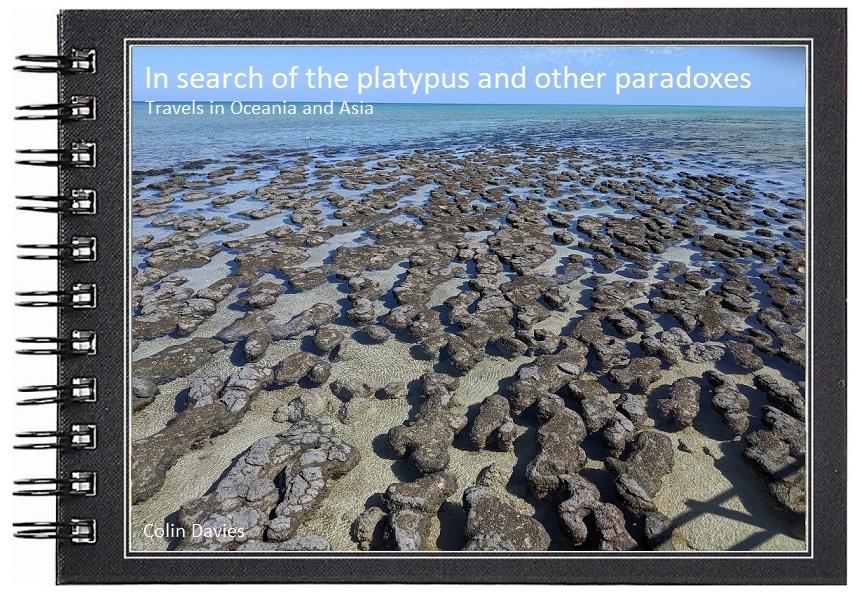
Monday, 3 February 2020

Buller's Albatross, Bicheno


I managed to persuade Elaine to have one last stop at Bicheno just north of Coles Bay today. I knew that strong north easterly winds gave me a good chance of Buller's albatross from Bicheno blow hole and I wasn't wrong. Even as we drove down to the car park I could see albatross over the sea and as soon as I started scanning I counted one, two, three....twenty at least! A fabulous sight to see so many albatross from land, but which species where they? Not too difficult to work out really, by far the most likely inshore species at this time of year are shy albatross with a pure white head and Buller's albatross with a grey hood. You can clearly see in the photo that this bird has a grey head and is Buller's albatross. Yes it could be Salvin's or grey-headed but they are quite rare here and usually seen far out to sea over deep waters, whereas Buller's is common here at this time of year and is often seen inshore. Today there were about 10 each of Buller's and shy albatross intermingled with about 30 Australian gannets and it was a real pleasure to watch them. This brings my albatross life list to 11 species, not bad at all.

Platypus


We saw at least five duck-billed platypus at Tasmanian Arboretum today. These and echidnas are my favourite mammal and a major reason for me to keep returning to Aus. We even saw the platypus swimming under water. Speaking of echidna, we saw three on our journey from Coles Bay to our accomodation at West Kentish.

Sunday, 2 February 2020

White-throated needletails, Freycinet National Park


Elaine wanted to spend some time on the beach today, so in the afternoon we headed for Friendly beaches about 10 miles north of Coles Bay in Freycinet National Park. What a beautiful beach, forget Wineglass Bay beach, Friendly beaches are much nicer. So while Elaine relaxed on the beach and soaked up some rays, I had a walk down the beach, found a good viewpoint and did an impromptu seawatch.

Most birds were distant, but there were a few Australian gannets and fluttering shearwaters close in and occasional Caspian and crested terns flew past.  I was hoping for Buller's albatross but had to be content with two reasonably close shy albatross. I never tire of seeing these birds but still, it was all a bit predictable.

After an hour I headed back to Elaine. When I got about halfway back I stopped and looked towards her with my binoculars to check that she was still there and BOOM, two white-throated needletails were flying right above her! Now I was hurrying back, because this was a species which I had been hoping to see in Australia ever since my very first visit in 2015. This is the holy grail species on the very rare occasions it turns up in the UK and the chances of me seeing one back home are very remote, so this was my opportunity to observe them. The needletails disappeared briefly inland but then suddenly reappeared over the beach, unfortunately a little too close to a group of bikini clad Chinese girls who were also enjoying the beach for me to feel comfortable in pointing my camera at them. Again they disappeared inland with incredible power and speed, they were like swifts on steroids. Eventually though they reappeared right over my head and allowed me to watch them for a few minutes before they disappeared for good.

Echidna, Freycinet National Park


On our way to Friendly Beaches today we came across this wonderful echinda. They really are one of my favourite mammals, how can you not love that face? Tasmanian echidnas have a lot more fur than their mainland cousins, probably because Tasmania is a lot colder and frequently gets snow.

Saturday, 1 February 2020

A corpse at Wineglass Bay


The walk to Wineglass Bay lookout from Coles Bay in Freycinet National Park is a pleasant enough walk and a popular tourist stop. The views are pretty good from the lookout and most people stop here but a few continue the walk down to the beach as we did today. A quick scan of the sea produced shearwaters (fluttering) and gannets (Australian) but really these are just southern hemisphere versions of Manx shearwater and northern gannet and this could just as easily be a scene from north Wales. What really makes these waters stand out is the presence of albatross. Now you know that you are in the southern hemisphere. Shy albatross is the species most likely to be seen from land in Tasmania at this time of year, but tantalisingly for me, Buller's albatross is the second commonest inshore species here, and this would be a new species for me so I took every opportunity to scan the sea.

No Buller's today, I had to be content with several shy albatross, but still a marvelous sight. Sadly, on the beach there was the washed up corpse of an albatross. It was a shy albatross, the largest of a group of albatrosses known as mollyhawks which are the lesser albatrosses. These have 2.5m wingspan. The great albatrosses, such as the wanderers, have wingspans of 3.5m.

Friday, 31 January 2020

Tasmanian Devil


Unbelievably tonight we saw a wild Tasmanian devil at the side of the road just outside the town of Bicheno. When planning the holiday I had no expectation what-so-ever of finding a wild individual for myself because they are nocturnal and have become so rare these days. The irony was that when we saw it we were returning to our campsite from an organised trip to see the species which had disappointingly turned out to be not much more than feeding time at the zoo. Nothing was wild and the devil's were fed a shot wallaby. Quite interesting but also a bit gruesome.

Tassie devils have declined by around 90% over the past few years due to a highly contagious facial cancer and this zoo is one of several around Tasmania which is trying to keep a cancer free population while scientists look for a cure, so in that respect they're doing a great job and more power to them. However it wasn't really for me, watching a wallaby being torn to pieces by a pack of devils with no table manners whilst we looked on and were served cheese and wine, almost like Romans at the Colosseum. Following that experience I can't say that they are my favourite animal but I guess if you watch a pack of wild dogs or cats feed that's not too pleasant either. However to see a truly wild individual was just fantastic and it will live long in the memory.


Thursday, 30 January 2020

Tasman Peninsula


We had a trip to the Tasman Peninsula today which was generally pretty disappointing. Eaglehawk Neck was good but Port Arthur was a waste of time, not what I expected at all. One or two birds of interest though, including several yellow-tailed black cockatoos. I always enjoy seeing any of the black cockatoos and these birds showed particularly well.

Wednesday, 29 January 2020

King Penguin, Bruny Island, Tasmania


"Let's go for a walk on the beach" said Elaine so we stopped at the first pull in we came across, walked down to the beach and the first bird I saw, standing alone about 50m from us right in the middle of the beach was a stunning adult king penguin! It was as straight forward as that. Just another day on Bruny Island, Tasmania. Incredible!

To say I'm still in a state of shock is an understatement. An adult king penguin? What are the odds of that? What an incredible bird.

There were a few tourists already watching it but they all seemed well behaved and gave it space. The bird seemed perfectly relaxed and appeared to be in good health.

Monday, 27 January 2020

Hector's Dolphins, Akaroa


Our last day in New Zealand and it was a cracker, loads of Hector's dolphins, white-flippered penguins, New Zealand fur seals, amazing sting rays and 4 species of shearwater, including Bullers which was new for me. Hector's dolphins are the smallest and one of the rarest with a very unusual 'Mickey Mouse ear' shaped dorsel fin.

Sunday, 26 January 2020

Wrybills at Lake Ellesmere, Christchurch


I got the car stuck in the mud of Lake Ellesmere today and it cost me £125 to get towed out. To make matters worse, Elaine was with me. There, I said it, now can we move on please.....

While we were waiting for the tow company to rescue us I noticed a flock of wrybills next to the car. Elaine couldn't believe that I started birding again, but I did. Here are the photos.....

Black stilts and braided rivers


Black stilt is one of the rarest birds in the world with just 132 known adults in existence in August 2018. Back in 1981 it was in an even worse position, with only 23 known adults. Today I got lucky and the host from our accommodation took me out early to a spot where he had recently seen a pair.

Mount Cook


Mount Cook, New Zealands highest mountain at 3,724m.


Friday, 24 January 2020

On the Stairway to Heaven and the journey to Lake Pukaki

Photo: Mueller Lake with Mount Cook
 shrouded in cloud behind.
The stairway to heaven winds its way up the flanks of Mount Oliver to Sealy Tarns and beyond if you're inclined to walk further. If you have the breath to take in the views behind you they are spectacular, with Mueller Lake and the mighty Mount Cook behind that. At 12,000 feet this is the highest mountain in New Zealand, whilst Mueller lake is no less impressive, the terminal lake of the Mueller glacier. It's an awesome spectacle and overhead several kea complete the dramatic scene as they wheel around with their strange cries filling the air, the mountain parrot of New Zealand.

Thursday, 23 January 2020

Te Waewae Bay

Photo: Video grab of part of a flock of around
 10,000 sooty shearwaters.

Te Waewae Bay is on the south coast of New Zealand opposite Stewart Island and beyond that Antarctica. It can be a stormy place and there are even Tsunami warning signs on the beaches. However the day we chose to go was calm and sunny. Out at sea there were thousands of sooty shearwaters going past harassed by the occasional Arctic skua. Amazing to think that the skuas may be Scottish bred and even a few of the shearwaters may be regular visitors to the UK! Also today, at least three Hector's dolphins, one of the rarest and smallest dolphins in the world.

Wednesday, 22 January 2020

Milford Sound


Milford Sound was every bit as good as they told us it would be. Eighth wonder of the world according to some and I'm not going to disagree. Not much to report other than amazing scenery and superb weather. Two kea flew over the ferry terminal and a couple of great white egrets chased each other around.

Monday, 20 January 2020

Above the treeline


Grand though some of the famous New Zealand walking trails are, unless you are a serious hiker getting past the treeline seems to present a real problem. For example a couple of days ago Elaine did a 15 mile return hike on the Routburn track from Glenorchy and still failed to clear the trees. Similarly though I haven't done it yet, I have been told that it's also a 7.5 mile hike to clear the trees from the other end of the Routeburn at the Divide. That's 7.5 miles there, 7.5 miles back. Now, impressive though these forests are, dominated by wonderful bryophytes and ferns, and alive with birds, I really did want to try to get above the trees and see some of the alpine flora of New Zealand.

Today we found a route up to The Remarkables Ski area which allowed us to drive up to 1550m with not a tree in sight. From there we then hiked up to Lake Alta at about 1800m, before climbing even further to over 2000m. At this height we were very much in amongst scree and boulders  and the there were plenty of alpine flowers about, though I didn't see a single bird.

Saturday, 18 January 2020

Riffleman and Yellowheads

Photo: Riffleman.
I spent the day in the woodlands of Glenorchy at the eastern end of the famous Routeburn track. The woodland was alive with birds and I managed a couple of new species for me. Undoubtedly though the highlight was the charming riffleman, a bird which I had seen previously at Arthur's Pass. Riffleman is the smallest bird in New Zealand, imagine a yellow-browed warbler or a goldcrest but without a tail, it's that small. It's a really odd looking thing and there were lots of them. Once I got to know the calls I picked them up everywhere and they were very confiding.

Thursday, 16 January 2020

The Westland Glaciers

Photo: Fox Glacier.
Westland National Park is a spectacular place with high snow capped peaks even in mid summer and dominated by two glaciers, Fox and Franz Josef. In truth these glaciers are nowhere near as impressive as they may appear from the photographs, on foot the nearest you can get to Fox Glacier is 2.5km, whereas Franz Josef is about 1km. They have receded considerably in recent years due to climate change and as you walk towards them you pass signs which indicate the position of previous glacier terminal faces. Still, the scenery is spectacular and even walking through the valley moraines deposited by the glaciers is an impressive experience for anybody interested in geography.

Wednesday, 15 January 2020

Experiencing Kiwi


Well nobody said that seeing kiwi would be easy but I didn't expect it to be quite so strange. Last time I was in New Zealand in 2018 I managed to see little spotted kiwi, this time I connected with great spotted kiwi and Rowi (also known as Okarito brown kiwi), but that only tells half the story!

Kiwi are nocturnal so that presents it's own set of problems, but they also live in woodland and all species are pretty rare. We were staying in Franz Josef Glacier, only about 15 miles from Okarito so I booked myself onto a tour run by Okratiro Kiwi Tours because this seemed the only realistic way of seeing a Rowi, the rarest of all the kiwi.

Tuesday, 14 January 2020

Kea at Arthur's Pass


Arthur's Pass is the gateway to the west coast of New Zealand when travelling from Christchurch and it is renowned for its friendly kea. These are large birds which are also known as mountain parotts and at Arthur's Pass they have become relatively tame and will even 'steal' items from unsuspecting tourists.

We saw about 4 birds in the village, and then two more at the Otira viaduct lookout. The latter were incredibly tame and one even came and pecked at my camera lens as I tried to take its photo.